bio.wikisort.org - Plant
Tristania is a monotypic genus of flowering plants native to New South Wales, Australia, closely related to Thaleropia.[3] The genus had a number of species, but some have been reclassified as Lophostemon and Tristaniopsis. The sole species currently in the genus is Tristania neriifolia. It is known commonly as the water gum.[4]
| Tristania neriifolia | |
|---|---|
 | |
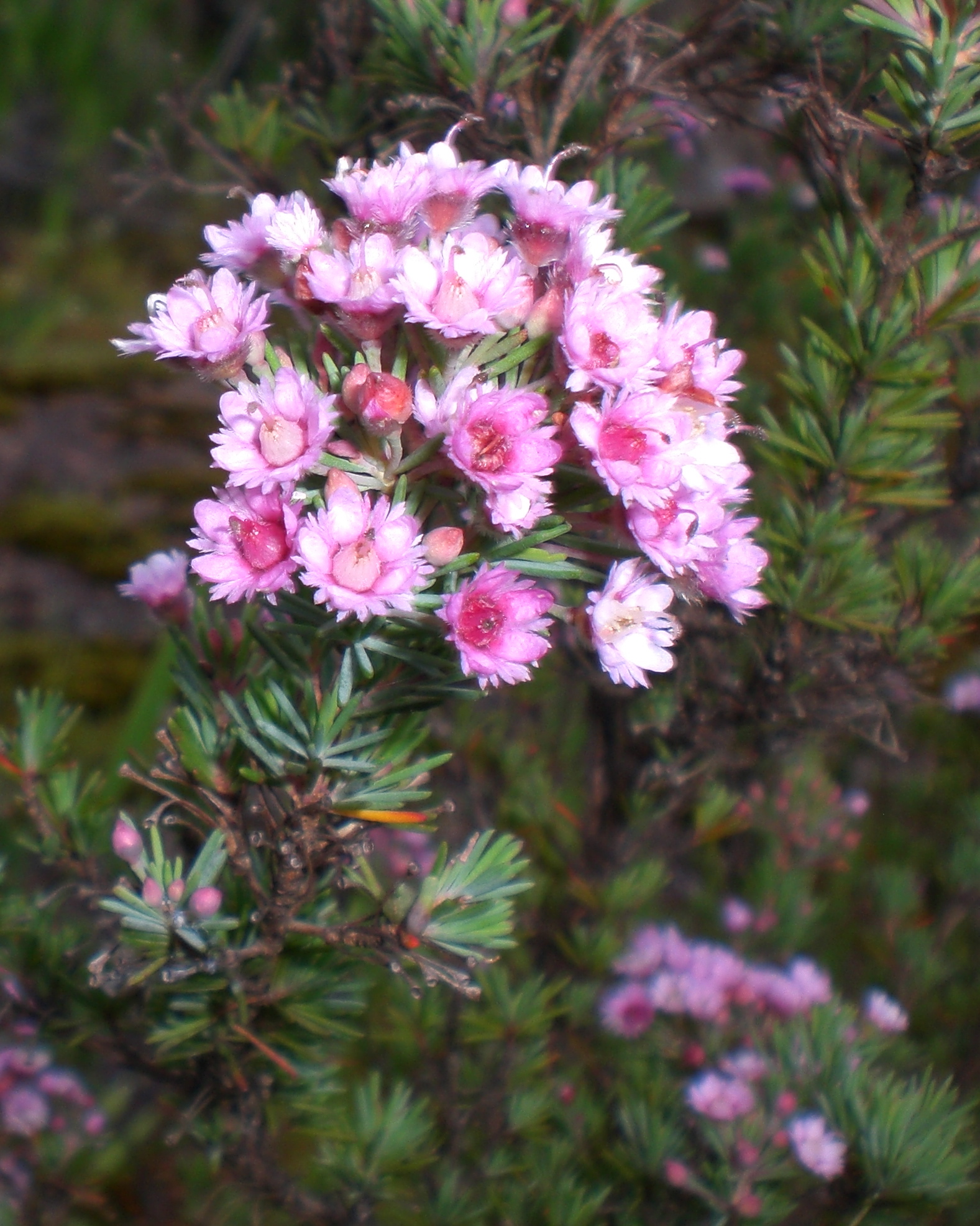
| Tristania neriifolia cultivated at Maleny, Queensland | |
Scientific classification  | |
| Kingdom: | Plantae |
| Clade: | Tracheophytes |
| Clade: | Angiosperms |
| Clade: | Eudicots |
| Clade: | Rosids |
| Order: | Myrtales |
| Family: | Myrtaceae |
| Subfamily: | Myrtoideae |
| Tribe: | Tristanieae |
| Genus: | Tristania R.Br. |
| Species: | T. neriifolia |
| Binomial name | |
| Tristania neriifolia (Sieber ex Sims) R.Br. | |
| Synonyms | |
|
Genus synonymy[1]
Species synonymy[2]
| |
It is a small tree, with dense branching. The leaves are evergreen, opposite, simple, lanceolate, 5–9 cm long and 1 cm broad. The flowers are produced in dense clusters of 3–15 together; each flower is 1–1.5 cm diameter, with five small yellow petals and numerous conspicuous stamens.
References
- "Tristania". Plants of the World Online. Royal Botanic Gardens, Kew. Retrieved 20 May 2022.
- "Tristania neriifolia". Plants of the World Online. Royal Botanic Gardens, Kew. Retrieved 20 May 2022.
- Biffin, E.; Lucas, E. J.; Craven, L. A.; Ribeiro da Costa, J.; Harrington, M. G.; Crisp, M. D. (2010). "Evolution of Exceptional Species Richness among Lineages of Fleshy-Fruited Myrtaceae". Annals of Botany. 106 (1): 79–93. doi:10.1093/aob/mcq088. PMID 20462850.
- Tristania neriifolia. Australian Native Plants Society.
 | This Myrtaceae article is a stub. You can help Wikipedia by expanding it. |
 | This Australian rosid article is a stub. You can help Wikipedia by expanding it. |
На других языках
- [en] Tristania neriifolia
[es] Tristania neriifolia
Tristania es un género monotípico de plantas perteneciente a la familia Myrtaceae. Su única especie: Tristania neriifolia (Sieber ex Sims) R.Br. in W.T.Aiton, Hortus Kew. 4: 417 (1812), es nativo de Nueva Gales del Sur, Australia. Está relacionado estrechamente con el género Callistemon. Algunas especies del género se han recalificado como Lophostemon y Tristaniopsis.Другой контент может иметь иную лицензию. Перед использованием материалов сайта WikiSort.org внимательно изучите правила лицензирования конкретных элементов наполнения сайта.
WikiSort.org - проект по пересортировке и дополнению контента Википедии