bio.wikisort.org - Animal
Fishing in the North Sea is concentrated in the southern part of the coastal waters. The main method of fishing is trawling.[citation needed]
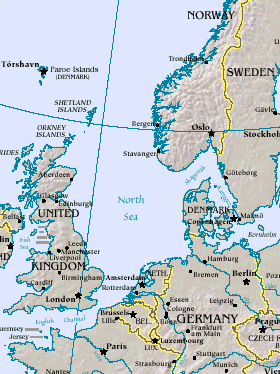
Annual catches grew each year until the 1980s, when a high point of more than 3 million metric tons (3.3 million S/T) was reached. Since then, the numbers have fallen back to around 2.3 million tons (2.5 million S/T) annually with considerable differences between years. Besides the fish caught, it is estimated that 150,000 metric tons (165,000 S/T) of unmarketable by-catch are caught and around 85,000 metric tons (94,000 S/T) of dead and injured invertebrates.[1]
Of the caught fish, about half are used for the production of fish oil and fish meal.[citation needed]
History
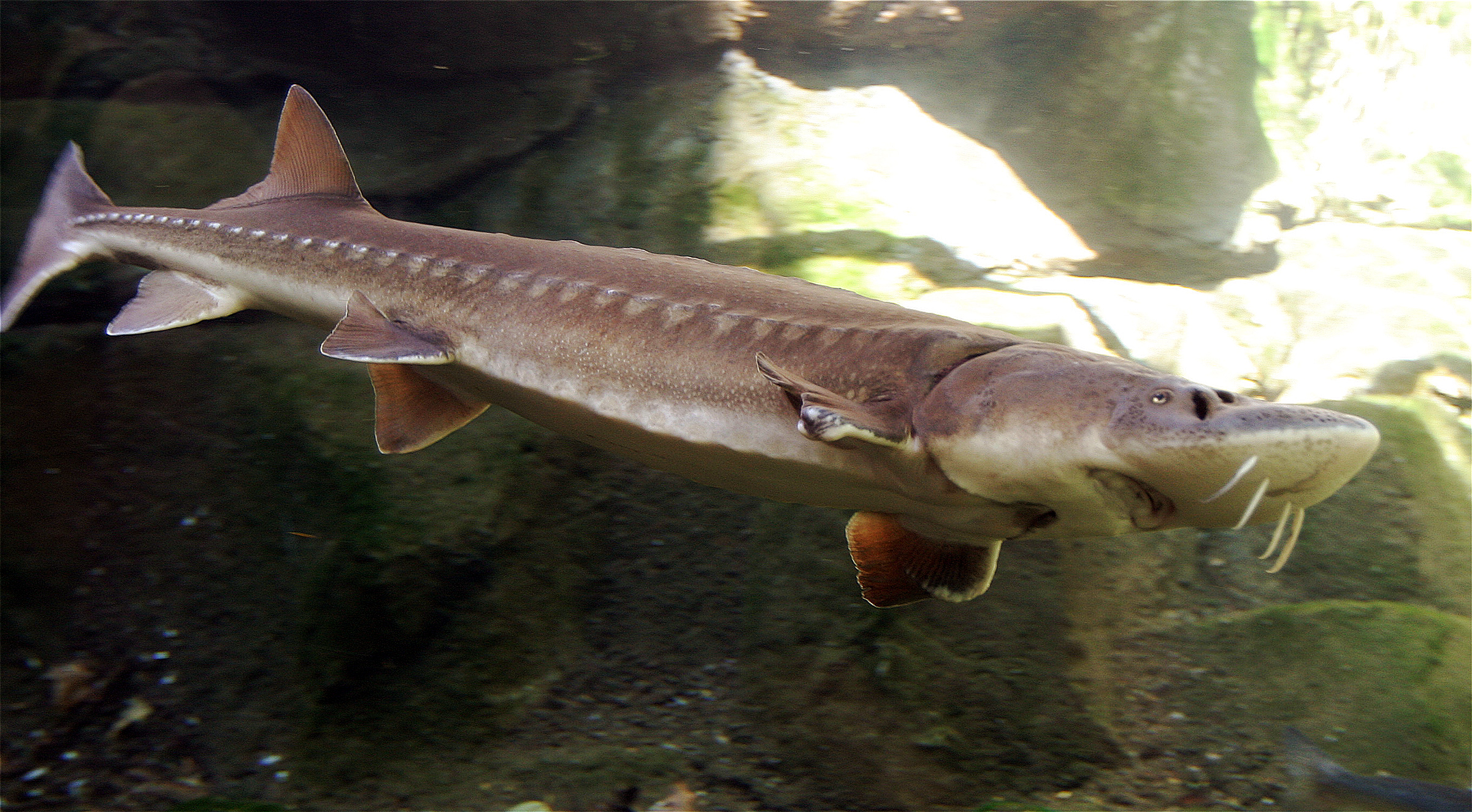
Sturgeon, shad, rays, skates and salmon among other species were common in the North Sea into the 20th century, when numbers declined due to overfishing.[2][3][4][5]
Other factors like the introduction of non-indigenous species, industrial and agricultural pollution, trawling and dredging, human-induced eutrophication, construction on coastal breeding and feeding grounds, sand and gravel extraction, offshore construction, and heavy shipping traffic have also contributed to the decline.
Various agreements have been made in the course of history. A 15th-century document illustrates shared use, and the "London convention on fisheries" was signed in 1964.[6]
The OSPAR commission manages the OSPAR convention to counteract the harmful effects of human activity on wildlife in the North Sea, preserve endangered species, and provide environmental protection.[7][8] All North Sea border states are signatories of the MARPOL 73/78 Accords which preserves the marine environment by preventing pollution from ships.[9][10] Germany, Denmark, and the Netherlands also have a trilateral agreement for the protection of the Wadden Sea, or mudflats, which run along the coasts of the three countries on the southern edge of the North Sea.[11]
At the end of the 19th century large quantities of herring were produced in Scotland. Today mainly mackerel, Atlantic cod, whiting, coalfish, European plaice, and sole are caught. In addition, common shrimp, lobster, and crab, along with a variety of shellfish are harvested.[12]
Overfishing

In recent decades, overfishing has left many fisheries unproductive, disturbing the marine food chain dynamics and costing jobs in the fishing industry.[13] Herring, cod and plaice fisheries may soon face the same plight as mackerel fishing which ceased in the 1970s due to overfishing.[14] Since the 1960s, various regulations have attempted to protect the stocks of fish such as limited fishing times and limited numbers of fishing boats, among other regulations. However, these rules were never systematically enforced and did not bring much relief. Since then, the United Kingdom and Denmark, two important fishing nations, became members of the EU, and have attempted, with the help of the Common Fisheries Policy, to bring the problem under control.[15] Countries in the EU also have their own policies and laws in an attempt to address the problem of overfishing. The differing policies between countries have been blamed as the cause of tension between fishers, such as the 2012 English Channel scallop fishing dispute.[16]
Norway, not a member of the EU, has also reached an agreement with the European Community concerning fishing policy. Regional advisory committees meet with the EU to help enforce policy.[17]
In addition to threats due to food-chain disturbances, non-target species often wind up as victims of intense fishing. Sea turtles, dolphins, harbour porpoises, rays, and dozens of fish species are killed or injured by trawlers nets and beams. Denmark's trawler fishing alone accounts for the deaths of 5,000 porpoises a year. [citation needed] Trawling can also have a destructive effect on seabed habitats as the trawler beams drag along the floor can uproot plants and destroy reefs.[18]
| Fish caught in the North Sea in metric tons | ||||||||||||
|---|---|---|---|---|---|---|---|---|---|---|---|---|
| Country | 1950 | 1960 | 1970 | 1980 | 1990 | 1996 | 2002 | |||||
| Denmark | 96,494 | 284,527 | 528,127 | 1,806,191 | 1,328,251 | 1,284,365 | 1,249,656 | |||||
| Norway | 296,337 | 323,381 | 480,819 | 498,777 | 617,741 | 618,669 | 691,062 | |||||
| United Kingdom | 308,895 | 343,002 | 410,775 | 389,417 | 343,205 | 355,385 | 295,367 | |||||
| Germany | 233,481 | 305,776 | 284,685 | 90,217 | 108,990 | 63,647 | 69,836 | |||||
| Netherlands | 64,438 | 92,119 | 121,524 | 213,365 | 256,597 | 140,765 | 146,835 | |||||
| Soviet Union / Russia | 89,269 | 352,857 | 429,182 | 7,181 | 1 | 0 | 0 | |||||
| France | 79,751 | 149,769 | 202,948 | 100,861 | 64,860 | 35,262 | 55,379 | |||||
| Sweden | 43,680 | 71,899 | 124,790 | 86,465 | 116,695 | 72,863 | 131,991 | |||||
| Faroe Islands | 38,630 | 17,111 | 63,725 | 71,540 | 23,292 | 27,572 | 0 | |||||
| Iceland | 0 | 50,065 | 21,111 | 523 | 0 | 8 | 4,668 | |||||
| Belgium | 28,036 | 30,094 | 26,547 | 32,065 | 26,889 | 18,880 | 14,657 | |||||
| Total | 1,286,230 | 2,120,137 | 2,807,950 | 3,306,127 | 2,893,422 | 2,643,719 | 2,687,299 | |||||
All numbers from the FAO, cited by the University of British Columbia. For the FAO, the region "North Sea" includes Skagerrak and Kattegat[19]
Notes

- "ROYAL SOCIETY OF EDINBURGH INQUIRY INTO THE SCOTTISH FISHING INDUSTRY" (PDF). Archived from the original (PDF) on 2008-02-16. Retrieved 2007-12-09.
- Brown, Paul (2002-03-21). "North Sea in crisis as skate dies out Ban placed on large areas to stave off risk of species being destroyed". Guardian Unlimited © Guardian News and Media Limited. Retrieved 2008-12-03.
- "Greenpeace builds shield against bottom trawling in the North Sea". Greenpeace Germany. 2008-08-12. Retrieved 2008-12-03.
- Williot, Patrick; Éric Rochard. "Ecosystems and territories" (PDF). Sturgeon, Restoring an endangered species. Cemagref. Archived from the original (PDF) on December 17, 2008. Retrieved 2008-12-03.
- "Red list fish: species at high risk of being sourced from fisheries using destructive practices". Greenpead UK. 2002-03-21. Archived from the original on 2008-12-08. Retrieved 2008-12-03.
- "Denmark to contest UK efforts to 'take back control' of fisheries". 2017-04-18. Retrieved 2017-04-19 – via The Guardian.
- "OSPAR Convention". European Union. 2000. Retrieved 2008-11-30.
- Wills, Jonathan (25 May 2000). "OSPAR Convention: Convention for Protection of Marine Environment of North-East Atlantic". The Law on Offshore Wastes Discharges in Different Jurisdictions - A Survey of Offshore Oilfield Drilling Wastes and Disposal Techniques to Reduce the Ecological Impact of Sea Dumping. Offshore Environment.com. Retrieved 2009-01-12.
- "Official Journal of the European Communities 28.12.2000 L 332/81". DIRECTIVE 2000/59/EC OF THE EUROPEAN PARLIAMENT AND OF THE COUNCIL of 27 November 2000 on port reception facilities for ship-generated waste and cargo residues. Retrieved 2009-01-12. "Member States have ratified Marpol 73/78".
- Copeland, C. (2008-02-06). "Cruise Ship Pollution: Background, Laws and Regulations, and Key Issues (Order Code RL32450)" (PDF). Congressional Research Service. Archived from the original (PDF) on December 17, 2008. Retrieved 2008-11-30.. This article incorporates text from this source, which is in the public domain.
- "Wadden Sea Region" (PDF). Scottish Natural Heritage: A Review of Relevant Experience in Sustainable Tourism in the Coastal and Marine Environment, Case Studies, Level 1, Wadden Sea Region. Stevens & Associates. 2006-06-01. Archived from the original (PDF) on 2008-12-17. Retrieved 2008-12-01.
- Greenpeace. "North Sea Fish Crisis part 1". Archived from the original on 2007-07-04. Retrieved 2007-07-19.
- Clover, Charles. 2004. The End of the Line: How overfishing is changing the world and what we eat. Ebury Press, London. ISBN 0-09-189780-7
- Summerschool on Coastal and Marine Management (2005). "Fisheries: North Sea". Retrieved 2007-07-19.
- "North Sea Fish Stocks: Good and Bad News" (PDF). International Council for the Exploration of the Sea. 18 October 2004. Archived from the original (PDF) on 10 July 2007. Retrieved 2007-07-19.
{{cite journal}}: Cite journal requires|journal=(help) - "Scallop War: French 'Pelt' British Fishermen". News.sky.com. 2012-10-11. Retrieved 2012-10-21.
- "The North Sea Commission". 2004. Archived from the original on 2007-08-04. Retrieved 2007-07-19.
- "WWF Smart Gear 2007". Archived from the original on 2007-11-23. Retrieved 2007-12-09.
- "Fisheries Centre of the University of British Columbia".[permanent dead link]
References
- Ilyina, P Ilyina (2007) The fate of persistent organic pollutants in the North Sea. Springer. ISBN 978-3-540-68162-5)
- Karlsdóttir, Hrefna M (2005) Fishing on common grounds : the consequences of unregulated fisheries of North Sea herring in the postwar period. ISBN 91-85196-62-2)
Fishing industry by region | ||
|---|---|---|
| By country |
|  |
| Fishing banks |
| |
| By species |
| |
| Other areas |
| |
Fisheries and fishing topic areas | ||
|---|---|---|
| Fisheries |
|  |
| Fishing |
| |
| Industry |
| |
| Recreation |
| |
| Techniques |
| |
| Tackle |
| |
| Locations |
| |
| ||


Другой контент может иметь иную лицензию. Перед использованием материалов сайта WikiSort.org внимательно изучите правила лицензирования конкретных элементов наполнения сайта.
WikiSort.org - проект по пересортировке и дополнению контента Википедии