bio.wikisort.org - Plant
Vincetoxicum hirundinaria, commonly named white swallow-wort, is a long-lived herbaceous perennial of the genus Vincetoxicum in the family Apocynaceae.
| Vincetoxicum hirundinaria | |
|---|---|
 | |
Scientific classification  | |
| Kingdom: | Plantae |
| Clade: | Tracheophytes |
| Clade: | Angiosperms |
| Clade: | Eudicots |
| Clade: | Asterids |
| Order: | Gentianales |
| Family: | Apocynaceae |
| Genus: | Vincetoxicum |
| Species: | V. hirundinaria |
| Binomial name | |
| Vincetoxicum hirundinaria Medik. | |
| Synonyms[1] | |
| |
Etymology
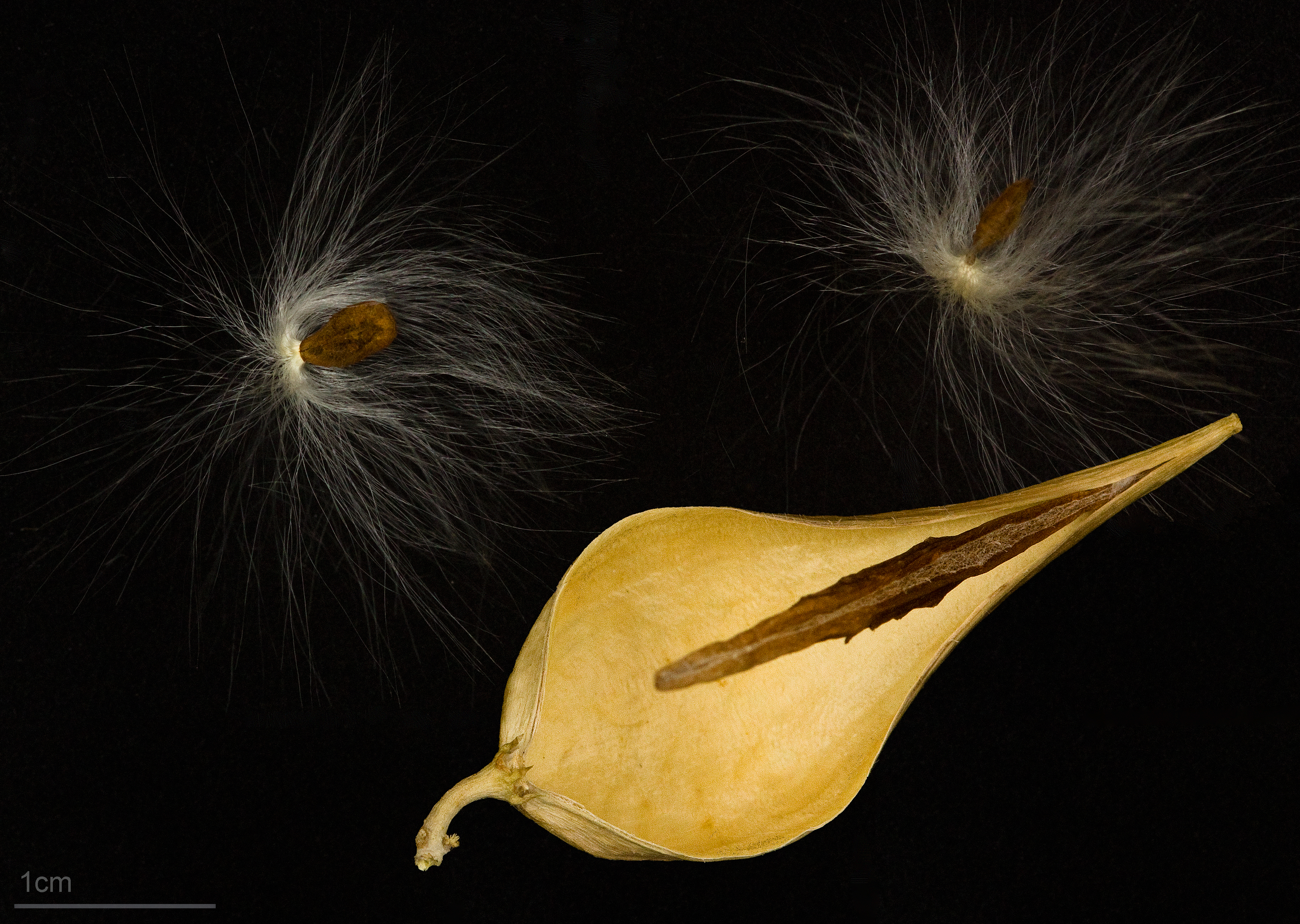
The generic name Vincetoxicum, in Latin meaning ‘conqueror of poison’, derives from the traditional use of this plant as an antidote to poisons.[2] The Latin species name hirundinaria (from hirundo, meaning swallow) and the common name white swallow-wort refer to its seedpods, that are reminiscent of a swallow's wing, or tail.
Description
Vincetoxicum hirundinaria can reach a height of 30–70 centimetres (12–28 in). Stem is erect, stout and glabrous. Flowers in whorls form a raceme. They have a diamenter of about 1 centimetre (0.39 in). Corolla has five white petals. Calyx is composed by five fused, sharp-pointed sepals. Leaves are opposite, ovate to lanceolate and short-stalked. Fruits reach a length of about 5 cm and contain many seeds showing a tuft of white hairs. Flowering time lasts from June to the end of July.[2]
Distribution and habitat
This species is native to cliffs and slopes, especially in calcareous soils, of continental Eurasia (including some Baltic islands).[3] There are introduced populations in North America (Ontario, Michigan, and New York).[1] It is not present in Great Britain and Ireland.
Human culture
Vincetoxicum hirundinaria is a venomous plant traditionally used in treating diseases and in magic. The plant was mentioned by Pedanius Dioscorides as a traditional plant used by Dacians and known as the "herb of animals", believed to open any locked door.[4]
Gallery
 Close-up on flowers
 Seeds and hairy wool
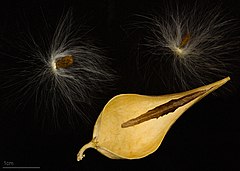 Fruit and seeds
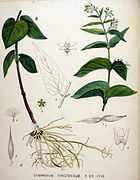 Illustration



References
- "Cynanchum vincetoxicum (L.) Pers".
- Nature Gate
- Leimu, R (Jan 2004). "Variation in the mating system of Vincetoxicum hirundinaria (Asclepiadaceae) in peripheral island populations" (Free full text). Annals of Botany. 93 (1): 107–13. doi:10.1093/aob/mch012. ISSN 0305-7364. PMC 4242266. PMID 14678943.
- Bucurescu, Adrian (22 August 2012). "Iarba fiarelor". The Epoch Times, Romania. Retrieved 24 March 2013.
External links
 Media related to Vincetoxicum hirundinaria at Wikimedia Commons
 Data related to Vincetoxicum hirundinaria at Wikispecies


 | This Apocynaceae article is a stub. You can help Wikipedia by expanding it. |
На других языках
- [en] Vincetoxicum hirundinaria
[es] Vincetoxicum hirundinaria
El vencetósigo (Vincetoxicum hirundinaria) es una especies de la familia de las asclepiadáceas.[ru] Ластовень лекарственный
Ла́стовень лека́рственный, также ластовень ла́сточкин, винцето́ксикум ласточкин, змеиный корень[2] (лат. Vincetóxicum hirundinária), — травянистое растение, вид подсемейства Ластовневые (Asclepiadoideae) семейства Кутровые (Apocynaceae), типовой вид рода Ластовень (Vincetoxicum).Другой контент может иметь иную лицензию. Перед использованием материалов сайта WikiSort.org внимательно изучите правила лицензирования конкретных элементов наполнения сайта.
WikiSort.org - проект по пересортировке и дополнению контента Википедии