bio.wikisort.org - Plant
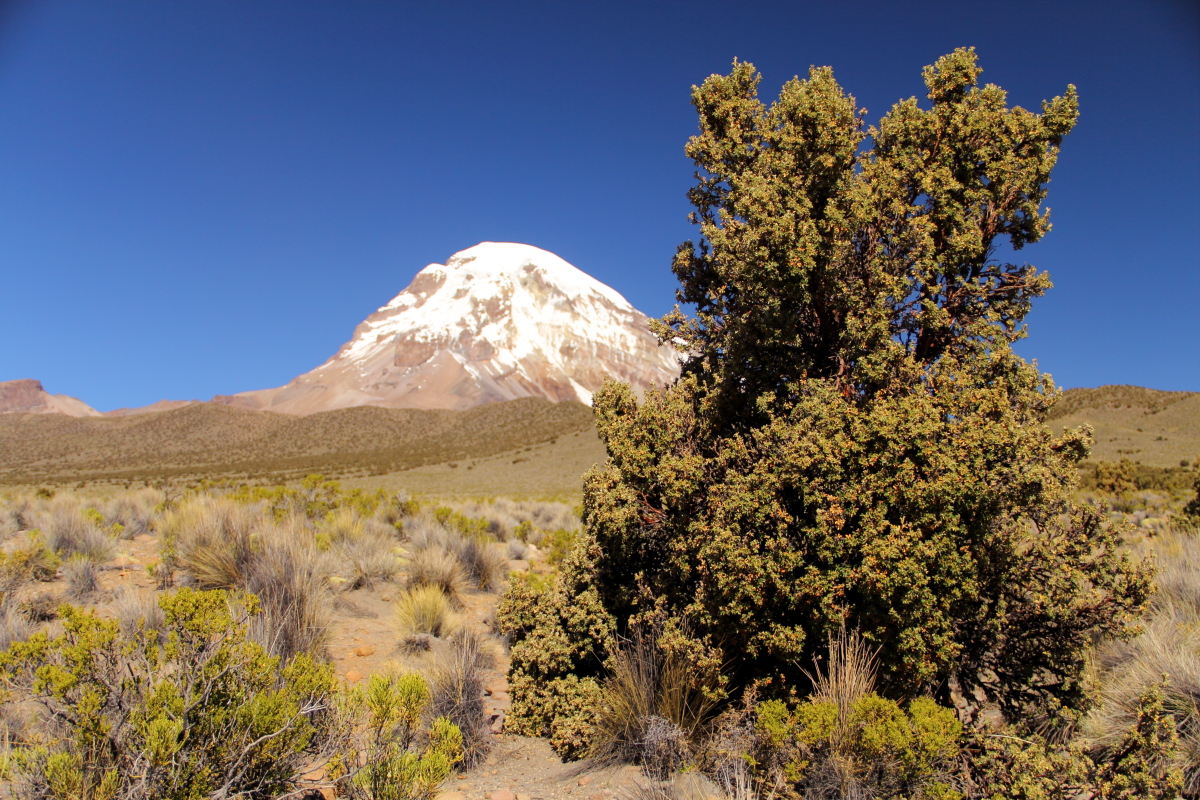
Polylepis tomentella, known in its native habitat by the Spanish common name queñoa de altura[1] (polylepis or quenoa of [high] altitude), is a short tree or shrub which is found in small, scattered groupings along the mountainous borders of Bolivia, Chile, and Peru (Western Cordillera),[1] growing in soil formed by volcanoes.[1] Populations may also be present in Argentina, but this is unconfirmed.[1]
| Polylepis tomentella | |
|---|---|
 | |
Conservation status | |
Scientific classification  | |
| Kingdom: | Plantae |
| Clade: | Tracheophytes |
| Clade: | Angiosperms |
| Clade: | Eudicots |
| Clade: | Rosids |
| Order: | Rosales |
| Family: | Rosaceae |
| Genus: | Polylepis |
| Species: | P. tomentella |
| Binomial name | |
| Polylepis tomentella | |
| Synonyms | |
|
Polylepis tarapacana Phil. | |
Sources
- Assessor: World Conservation Monitoring Centre (1998). "Polylepis tarapacana in IUCN 2011". IUCN Red List of Threatened Species. Version 2011.1. International Union for Conservation of Nature and Natural Resources. Retrieved July 28, 2011.
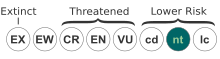
Lower Risk/near threatened ; Needs updating
 | This Rosoideae article is a stub. You can help Wikipedia by expanding it. |
Текст в блоке "Читать" взят с сайта "Википедия" и доступен по лицензии Creative Commons Attribution-ShareAlike; в отдельных случаях могут действовать дополнительные условия.
Другой контент может иметь иную лицензию. Перед использованием материалов сайта WikiSort.org внимательно изучите правила лицензирования конкретных элементов наполнения сайта.
Другой контент может иметь иную лицензию. Перед использованием материалов сайта WikiSort.org внимательно изучите правила лицензирования конкретных элементов наполнения сайта.
2019-2026
WikiSort.org - проект по пересортировке и дополнению контента Википедии
WikiSort.org - проект по пересортировке и дополнению контента Википедии