bio.wikisort.org - Plant
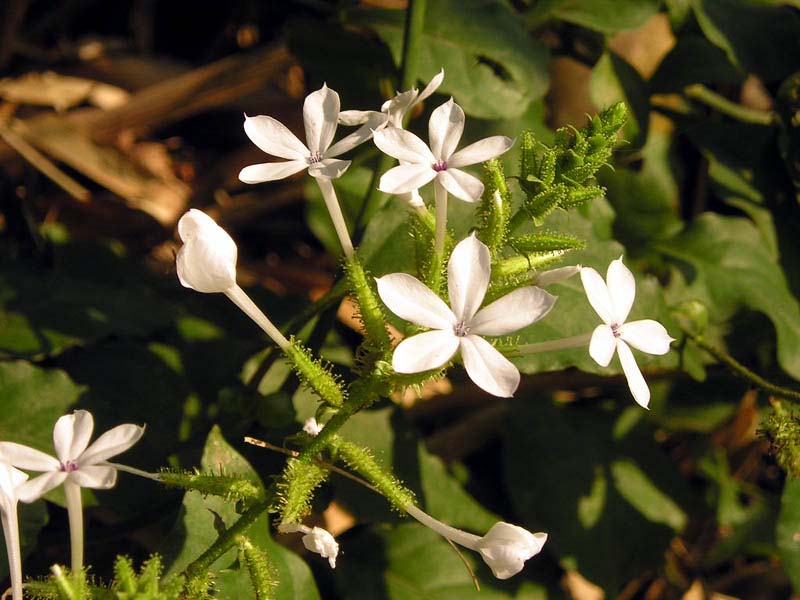
Plumbago zeylanica, commonly known as Ceylon leadwort, doctorbush[2] or wild leadwort,[3] is a species of plumbago with a pantropical distribution. Carl Linnaeus described the paleotropical P. zeylanica and Neotropical P. scandens as separate species, but they are currently considered synonymous.
| Plumbago zeylanica | |
|---|---|
 | |
Scientific classification  | |
| Kingdom: | Plantae |
| Clade: | Tracheophytes |
| Clade: | Angiosperms |
| Clade: | Eudicots |
| Order: | Caryophyllales |
| Family: | Plumbaginaceae |
| Genus: | Plumbago |
| Species: | P. zeylanica |
| Binomial name | |
| Plumbago zeylanica | |
| Synonyms[1] | |
|
Plumbago scandens L. | |
Description
Plumbago zeylanica is a herbaceous plant with glabrous stems that are climbing, prostrate, or erect. The leaves are petiolate or sessile and have ovate, lance-elliptic, or spatulate to oblanceolate blades that measure 5-9 × 2.5–4 cm in length. Bases are attenuate while apexes are acute, acuminate, or obtuse. Inflorescences are 3–15 cm in length and have glandular, viscid rachises. Bracts are lanceolate and 3-7 × 1–2 mm long. The heterostylous flowers have white corollas 17–33 mm in diameter and tubes 12.5–28 mm in length. Capsules are 7.5–8 mm long and contain are reddish brown to dark brown seeds.[1]
Distribution and habitat
Plumbago zeylanica grows throughout the tropical and sub-tropical climates of the world,[citation needed] including Australia and India. In Australia, it grows in the understory of monsoon forests and vine thickets from sea level to 900 m.[4] In Dhofar, Oman, this species is often found growing on Olea trunks.[5]
Ecology
Plumbago zeylanica is a food plant for the Cassius blue (Leptotes cassius), marine blue (L. marina), and zebra blue (L. plinius) during their larval stages.[4][6][7]
Traditional medicine
Early folk medicine used the crushed plant internally and externally as an abortifacient.[5] In Ayurveda, P. zeylanica is known as chitrak, meaning "the spotted one". It is used with other herbs to lessen its intense pungency.[8]
References
- "Plumbago zeylanica Linnaeus, Sp. Pl. 1: 151. 1753". Flora of North America. eFloras.org. Retrieved 2011-06-30.
- "Plumbago zeylanica". Germplasm Resources Information Network (GRIN). Agricultural Research Service (ARS), United States Department of Agriculture (USDA). Retrieved 2011-02-23.
- USDA, NRCS (n.d.). "Plumbago zeylanica". The PLANTS Database (plants.usda.gov). Greensboro, North Carolina: National Plant Data Team. Retrieved 8 October 2015.
- F.A.Zich; B.P.M.Hyland; T.Whiffen; R.A.Kerrigan (2020). "Plumbago zeylanica". Australian Tropical Rainforest Plants (RFK8). Centre for Australian National Biodiversity Research (CANBR), Australian Government. Retrieved 27 May 2021.
- G., Miller, Anthony (1988). Plants of Dhofar, the Southern Region of Oman: Traditional, Economic, and Medicinal Uses. Morris, Miranda., Stuart-Smith, Susanna., Oman. Office of the Adviser for Conservation of the Environment. Muscat: Office of the Adviser for Conservation of the Environment, Diwan of Royal Court, Sultanate of Oman. p. 232. ISBN 0715708082. OCLC 20798112.
- "Butterfly Larvae & Host Plants" (PDF). Xerces Society. Retrieved 2018-11-24.
- "Featured Plants Spring 2016" (PDF). Desert Survivors. February 2016. p. 3.
- Pole, Sebastian. Ayurvedic Medicine: The Principles of Traditional Practice. Singing Dragon, 2013. p156.
External links
 Media related to Plumbago zeylanica at Wikimedia Commons
 Data related to Plumbago zeylanica at Wikispecies
- Plumbago zeylanica in West African plants – A Photo Guide.


Другой контент может иметь иную лицензию. Перед использованием материалов сайта WikiSort.org внимательно изучите правила лицензирования конкретных элементов наполнения сайта.
WikiSort.org - проект по пересортировке и дополнению контента Википедии