bio.wikisort.org - Plant
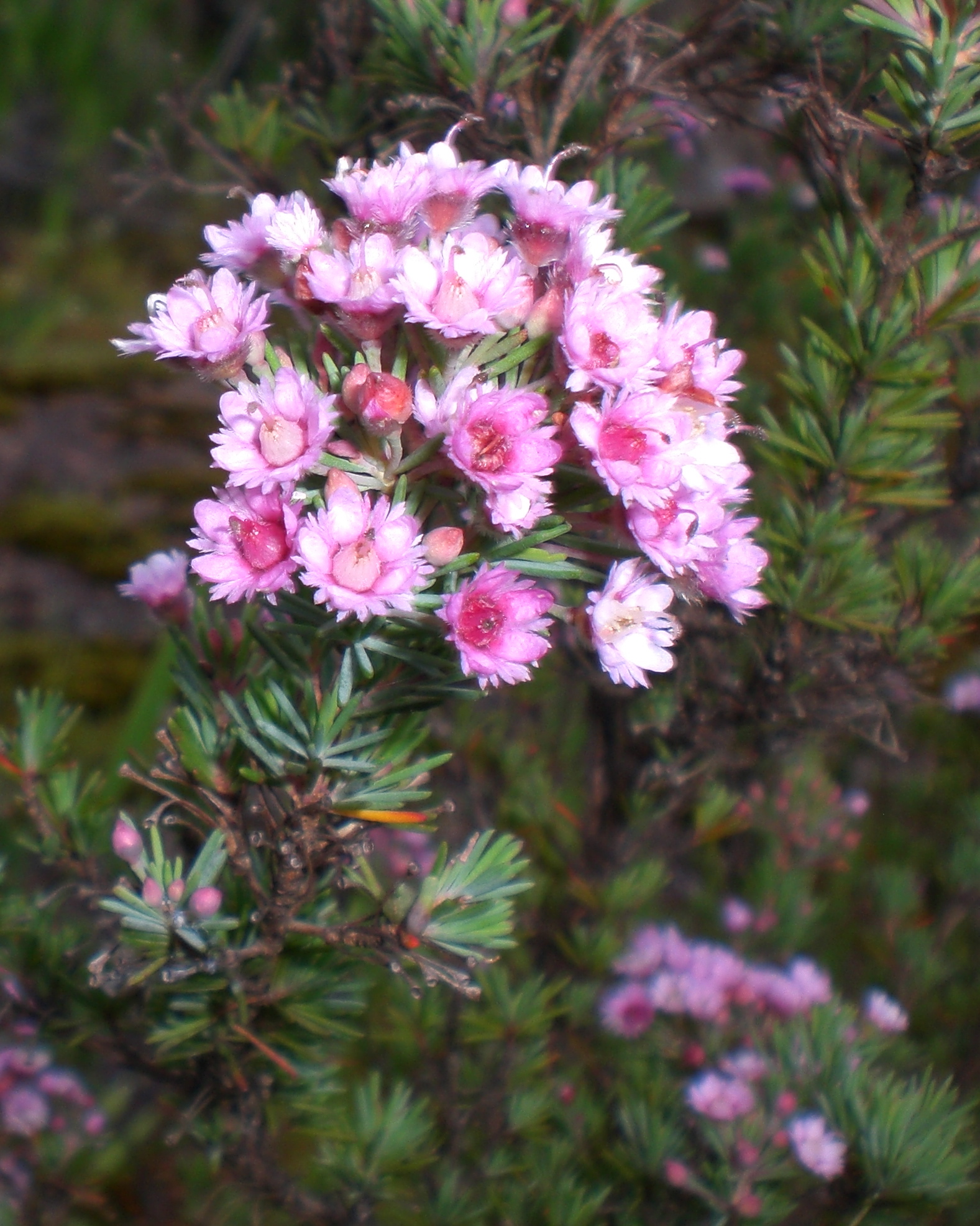
Pileanthus limacis, commonly known as coastal coppercups,[1] is a plant species of the family Myrtaceae endemic to Western Australia.[2]
| Coastal coppercups | |
|---|---|
 | |
Scientific classification  | |
| Kingdom: | Plantae |
| Clade: | Tracheophytes |
| Clade: | Angiosperms |
| Clade: | Eudicots |
| Clade: | Rosids |
| Order: | Myrtales |
| Family: | Myrtaceae |
| Genus: | Pileanthus |
| Species: | P. limacis |
| Binomial name | |
| Pileanthus limacis Labill. | |
The low spreading to prostrate shrub typically grows to a height of 0.8 metres (2.6 ft). It blooms between July and October producing white-pinkflowers.
It is found on coastal sand dunes in the Gascoyne and Pilbara regions of Western Australia between Shark Bay and Ashburton where it grows in sandy soils over limestone.[2]
The species was first formally described by the botanist Jacques Labillardière in 1806 in the work Novae Hollandiae Plantarum Specimen.[3]
References
- Luke Sweedman, David Merritt (2006). Australian Seeds: A Guide to Their Collection, Identification and Biology. CSIRO Publishing. ISBN 9780643098602.
- "Pileanthus limacis". FloraBase. Western Australian Government Department of Biodiversity, Conservation and Attractions.
- "Pileanthus limacis Labill". Atlas of Living Australia. Global Biodiversity Information Facility. Retrieved 8 April 2017.
 | This Myrtaceae article is a stub. You can help Wikipedia by expanding it. |
 | This Western Australian plant article is a stub. You can help Wikipedia by expanding it. |
 | This Australian rosid article is a stub. You can help Wikipedia by expanding it. |
Другой контент может иметь иную лицензию. Перед использованием материалов сайта WikiSort.org внимательно изучите правила лицензирования конкретных элементов наполнения сайта.
WikiSort.org - проект по пересортировке и дополнению контента Википедии