bio.wikisort.org - Plant
Endiandra globosa is a medium-sized Australian rainforest tree. Despite the common name of black walnut, this tree is unrelated to northern hemisphere walnuts, and is a Laurel.
| Endiandra globosa | |
|---|---|
 | |
Conservation status | |
 Vulnerable (EPBC Act) | |
Scientific classification  | |
| Kingdom: | Plantae |
| Clade: | Tracheophytes |
| Clade: | Angiosperms |
| Clade: | Magnoliids |
| Order: | Laurales |
| Family: | Lauraceae |
| Genus: | Endiandra |
| Species: | E. globosa |
| Binomial name | |
| Endiandra globosa | |
The black walnut is restricted to riverine rainforest. Growing on rich alluvial soils and on moist slopes in subtropical rainforest; in the Brunswick and Tweed valleys in New South Wales and adjacent areas in Queensland. Another population grows from Ingham to Cairns in tropical Queensland.[1]
The black walnut is considered rare, with a ROTAP rating of 2RC-. Several signposted specimens can be seen on the roads around the town of Murwillumbah in north eastern NSW.
Description
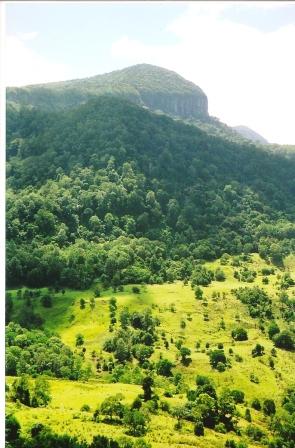

The unbuttressed trunk is of whitish, grey or brown bark. A mature tree grows to around to 25 metres tall.
Leaves are broad-elliptic to elliptic or ovate, veiny and usually 7–15 cm long, 3–6 cm wide, veins often yellowish. The horizontal form of the branches and attractive dark foliage makes this a particularly beautiful tree.
Creamy white flowers form between October and January. The fruit matures in autumn and is often the size of a tennis ball. The black, fleshy drupe contains a large woody seed, which itself has attractive veiny patterns. Germination is fairly slow but reliable. Roots and shoots appear around November.
References
- Floyd, Alexander G., Rainforest Trees of Mainland South-eastern Australia, Inkata Press 2008, ISBN 978-0-9589436-7-3 page 195
- Floyd, Alexander G., Rainforest Trees of Mainland South-eastern Australia, Inkata Press 1989, ISBN 0-909605-57-2
- "Endiandra globosa". PlantNET - NSW Flora Online. Retrieved 2009-08-03.
На других языках
- [en] Endiandra globosa
[es] Endiandra globosa
Endiandra globosa es un árbol de talla mediana del bosque templado húmedo de Australia. A pesar del nombre común de Nogal Negro (Black Walnut), este árbol no está relacionado con los nogales del hemisferio norte y realmente está emparentada con el laurel.Другой контент может иметь иную лицензию. Перед использованием материалов сайта WikiSort.org внимательно изучите правила лицензирования конкретных элементов наполнения сайта.
WikiSort.org - проект по пересортировке и дополнению контента Википедии