bio.wikisort.org - Plant
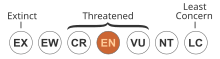
Cephalotaxus hainanensis is a species of conifer known by the common name Hainan plum-yew. It is endemic to the island of Hainan in southern China.[1] It is possibly a synonym of Cephalotaxus mannii.[2]
| Cephalotaxus hainanensis | |
|---|---|
Conservation status | |
Scientific classification  | |
| Kingdom: | Plantae |
| Clade: | Tracheophytes |
| (unranked): | Gymnosperms |
| Division: | Pinophyta |
| Class: | Pinopsida |
| Order: | Pinales |
| Family: | Taxaceae |
| Genus: | Cephalotaxus |
| Species: | C. hainanensis |
| Binomial name | |
| Cephalotaxus hainanensis H.L.Li | |
This species grows in warmer temperate and subtropical rainforest habitat. When mature it is a tree 10 to 20 meters tall. It is sometimes a dominant species in the local ecosystem.[1]
C. hainanensis is suggested to have antileukemia activity, and is widely used as an herbal remedy in China.[3] Exploitation of the bark and leaves is a potential threat to this species.[1] Logging has historically been a cause of its decline, but as logging is no longer allowed on Hainan,[1] much of the pressure is currently from illegal harvesting for Chinese remedies.
References
- Yang, Y. & Liao, W. 2013. Cephalotaxus hainanensis. The IUCN Red List of Threatened Species. Version 2015.2. Downloaded on 01 September 2015.
- Tripp, Kim E. (1995). "Cephalotaxus: the plum yews" (PDF). Arnoldia. 55 (1): 25–39.
- Han, R. (1994). "Highlight on the studies of anticancer drugs derived from plants in China". Stem Cells. 12 (1): 53–63. doi:10.1002/stem.5530120110. PMID 8142920. S2CID 45118359.
Другой контент может иметь иную лицензию. Перед использованием материалов сайта WikiSort.org внимательно изучите правила лицензирования конкретных элементов наполнения сайта.
WikiSort.org - проект по пересортировке и дополнению контента Википедии