bio.wikisort.org - Plant
Artemisia bigelovii is a North American species of sagebrush known by the common name Bigelow sagebrush or flat sagebrush.[3] It grows in the deserts of the southwestern United States.[4]
| Artemisia bigelovii | |
|---|---|
 | |
Scientific classification  | |
| Kingdom: | Plantae |
| Clade: | Tracheophytes |
| Clade: | Angiosperms |
| Clade: | Eudicots |
| Clade: | Asterids |
| Order: | Asterales |
| Family: | Asteraceae |
| Genus: | Artemisia |
| Species: | A. bigelovii |
| Binomial name | |
| Artemisia bigelovii | |
| Synonyms[1] | |
| |
Distribution
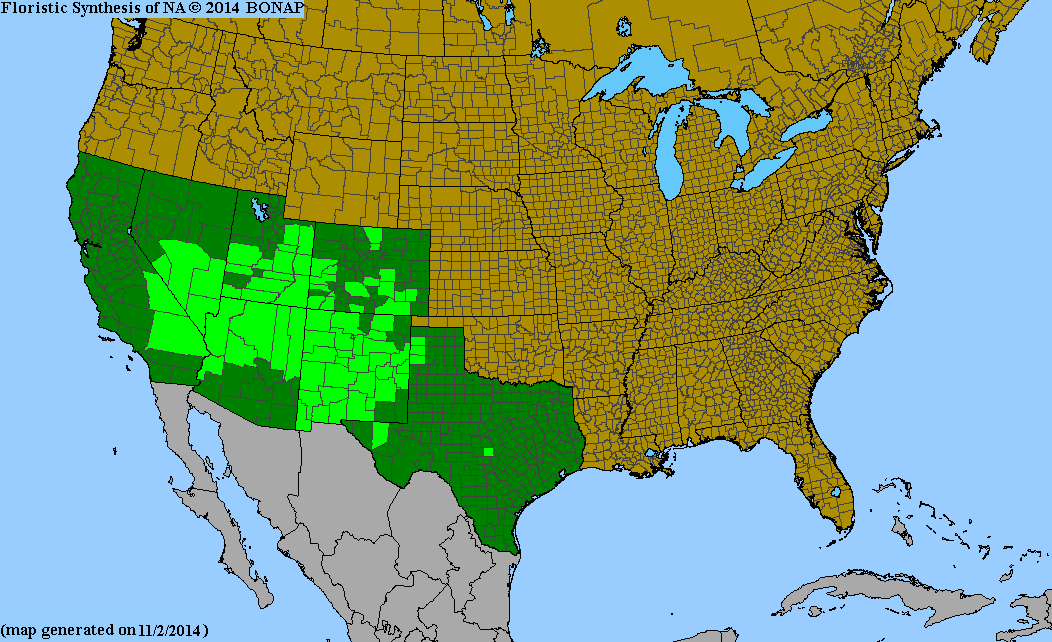
It is native to California (Inyo + San Bernardino Counties),[3] Arizona, Nevada, Utah, Colorado, New Mexico, and Texas.[5] It grows in desert, basin, grassland, and juniper woodland habitats. It is very drought-tolerant and lives in arid regions on sandy and limestone-rich soils.[6]
Description
Artemisia bigelovii is a shrub growing from a woody base and reaching a maximum height around 50 cm (20 inches). It has many slender, curving branches with shredding bark and is generally in overall habit.[4]
The stem branches and leaves are coated in silvery hairs, giving the plant a gray color. The leaves are less than 3 centimeters long and may end in a point or in three distinct teeth.[4]
The inflorescence is a panicle of flower heads containing yellowish disc florets and occasionally a small ray floret. The fruit is a tiny achene about a millimeter long.[4]
Uses
This species of sagebrush is good winter fodder for grazing animals and it is cultivated as plant cover on recovering rangeland and for erosion control.[6]
References
- The Plant List Artemisia bigelovii A.Gray
- International Code of Nomenclature for algae, fungi, and plants (Melbourne Code) see section 60.7, example 15
- Calflora taxon report, University of California, Artemisia bigelovii A. Gray Bigelow sagebrush, Flat sagebrush
- Flora of North America Vol. 19, 20 and 21 Page 512 Bigelow sagebrush Artemisia bigelovii A. Gray in War Department [U.S.], Pacif. Railr. Rep. 4(5): 110. 1857.
- Biota of North America Program 2014 county distribution map
- Forest Service Fire Ecology
External links
- Jepson Manual Treatment
- Artemisia bigelovii in the CalPhotos photo database, University of California, Berkeley
- Southwest Colorado Wildflowers
- SEINet Arizona Chapter, Artemisia bigelovii A. Gray
- United States Department of the Interior, National Park Service, Arches National Park, Bigelow's Sagebrush (Bigelow's Sage; Big Basin Sagebrush)
 |
Wikimedia Commons has media related to Artemisia bigelovii. |
Другой контент может иметь иную лицензию. Перед использованием материалов сайта WikiSort.org внимательно изучите правила лицензирования конкретных элементов наполнения сайта.
WikiSort.org - проект по пересортировке и дополнению контента Википедии