bio.wikisort.org - Animal
Trifurcula immundella, the broom pygmy moth, is a moth of the family Nepticulidae. It is found in western Europe, wherever the host plant occurs.
| Broom pygmy moth | |
|---|---|
Scientific classification  | |
| Kingdom: | Animalia |
| Phylum: | Arthropoda |
| Class: | Insecta |
| Order: | Lepidoptera |
| Family: | Nepticulidae |
| Genus: | Trifurcula |
| Species: | T. immundella |
| Binomial name | |
| Trifurcula immundella (Zeller, 1839) | |
| Synonyms | |
| |
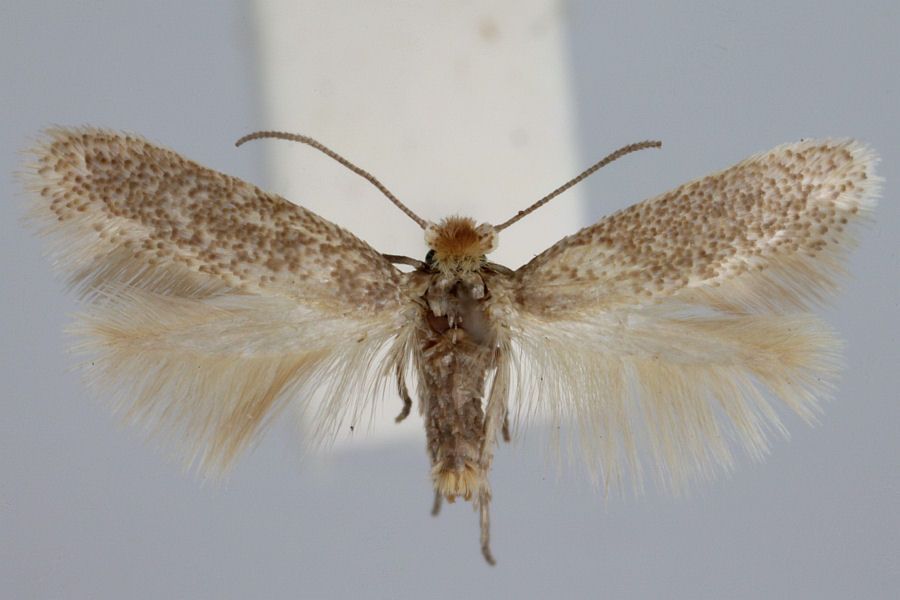
The wingspan is 6–8.4 mm. The thick erect hairs on the head vertex are ferruginous-yellowish, sometimes mixed with fuscous. The collar is rust brown. Antennal eyecaps are whitish. The forewings are ochreous-grey-whitish, coarsely irrorated with fuscous. Hindwings grey.[1] External image
Adults are on wing from June to August.
The larvae feed on Cytisus scoparius. They mine the bark of twigs of their host plant. The mine consists of a dark gallery, which is similar to the mine of Leucoptera spartifoliella.
References
- Meyrick, E., 1895 A Handbook of British Lepidoptera MacMillan, London
External links
- Fauna Europaea
- UKmoths
- Swedish Moths
- Figures of genitalia
- lepiforum.de

Wikispecies has information related to Trifurcula immundella.

Wikimedia Commons has media related to Trifurcula immundella.
Текст в блоке "Читать" взят с сайта "Википедия" и доступен по лицензии Creative Commons Attribution-ShareAlike; в отдельных случаях могут действовать дополнительные условия.
Другой контент может иметь иную лицензию. Перед использованием материалов сайта WikiSort.org внимательно изучите правила лицензирования конкретных элементов наполнения сайта.
Другой контент может иметь иную лицензию. Перед использованием материалов сайта WikiSort.org внимательно изучите правила лицензирования конкретных элементов наполнения сайта.
2019-2026
WikiSort.org - проект по пересортировке и дополнению контента Википедии
WikiSort.org - проект по пересортировке и дополнению контента Википедии